


Text: Josefina Salomón
Illustration: Jonh Gómez
From the mothers of the disappeared in Argentina to community leaders in Colombia and indigenous leaders in Guatemala, women have been at the forefront of peace processes throughout Latin America for decades.
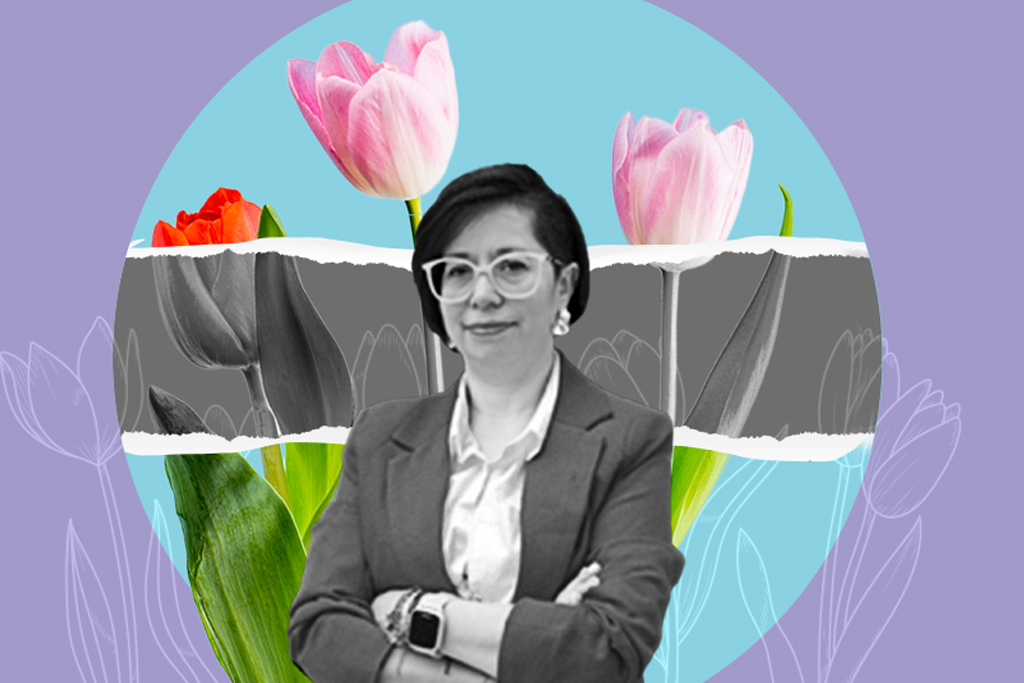
Researcher Diana María Salcedo López says that despite the new challenges presented by the current context—including the fragmentation of criminal organisations and the low resilience of states—she has a hopeful outlook on the future.
We spoke with Salcedo López, who will lead the panel ‘Civil society experiences in peacebuilding’ at the Amassuru 2025 Seminar ‘Challenges for peacebuilding in a context of violence.’
In.Visibles (IV): What are some good examples of civil society experiences in peacebuilding in Latin America?
Diana María Salcedo López (DMSL): In Latin America, Colombia is one of the clearest examples in terms of peacebuilding, because of the role that feminist and women’s movements in general played as part of the talks around the peace agreement, which made it possible for everyone to agree that peace can only be achieved with women as part of it. We have generated innovative proposals, which led to the inclusion of more than 100 measures in the 2016 peace agreement with the Revolutionary Armed Forces of Colombia (FARC) and continue to exert pressure today for the negotiation and dismantling of illegal armed groups and the recognition of the violence committed by the armed forces.
But there are many other inspiring experiences in the region. For example, the Truth Commission in Peru was a process that documented cases of sexual violence committed in the context of armed conflict. As part of the transitional justice that followed, visibility was given to women who had disappeared and those who had survived sexual violence, and comprehensive reparation and memory programmes were proposed, making Peru a benchmark in the construction of formal peace.
Guatemala is also a good example of the political participation of indigenous women and the recognition of the disproportionate impacts of violence on their bodies, achieving the world’s first trial for sexual and domestic slavery as a war crime, as well as their recognition as subjects of rights and actors in peacebuilding.
In Guatemala, Colombia, and Argentina with the Mothers of the Plaza de Mayo, all the exercises in memory and justice that have taken place in countries in conflict in Latin America have shown that women are not only victims of war and other systems of oppression, but are also at the centre of peacebuilding, with a very different vision of how to deal with conflicts and how to solve problems that are both everyday and structural.
The challenge is that, to date, many of these achievements have seen little progress when it comes to their implementation as well as the multiple conflicts that continue to mark women’s lives.
IV: Colombia appears to be a clear example of progress, but also of challenges in terms of transitional justice.
DMSL: Yes. In Colombia, we are at a turning point. Next year will mark ten years since the signing of the peace agreement, and the results are quite mixed. Although progress has been made in recent years in the implementation of some gender measures, many others are still lagging behind. At an adequate pace of implementation, the agreement in Colombia should be 50% fully implemented; however, we have not exceeded 7-10% in structural areas, particularly due to polarisation in relation to the peace agreement, which prevents the sustained allocation of resources and a comprehensive response to the conflict.
Part of the complexity is related to the context. Before, we had the FARC as a dominant actor in the territories, and there was clarity about where they were, their structure, their identity, and their agenda. But now there is such a dispersion of armed groups that, in addition to coexisting with state groups, everything is much more complex.
IV: What actions are women taking in these contexts?
DMSL: Women are participating at all levels, promoting a culture of peace and exercises in reconstructing history and memory that include, among many other aspects, recognising otherness, the humanity that exists in others, even in those who have inflicted violence on our bodies. This is the result of many lessons learned over the years. In particular, for example, the women who signed the Peace Agreement are now supporting reintegration and mobilising community processes, while women victims and defenders are putting pressure on the justice system to guarantee non-repetition.
IV: We are facing new scenarios with transnational criminal actors and states that are not very resilient to crime. How can peace be built in this context?
DMSL: It is a very interesting moment in which women are taking a more regional view of organised crime. Security studies from a women’s perspective are very recent, but they are already showing that women’s bodies are subject to commodification that transcends borders. This takes the form of sexual exploitation, the use of women’s bodies to transport drugs, or in other roles that women fulfil in organised crime structures.
Therefore, the regional context requires an understanding of what is happening and how it is affecting communities in different ways. Alternative and sustainable interventions that offer real alternatives to illegal economies and the strengthening of judicial mechanisms for transnational cooperation are needed at the formal level. At the community level, it is urgent to respond to the structural needs of those who have been made most vulnerable and whose lack of opportunities is exploited by organised crime.
IV: New forms of authoritarianism are also emerging as a challenge.
DMSL: Yes, and they take different forms. The withdrawal of USAID (the United States Agency for International Development), for example, undoubtedly affects peacebuilding processes. In addition, the far-right agenda also affects the exercise of women’s rights, including sexual and reproductive rights and, in general, the management of our bodies, from voluntary termination of pregnancy to sex changes, with its rhetoric and policies, reinforcing the idea of militarisation as central to the fight against crime. This is a danger that we are facing in countries that are in the electoral period, which will surely be exploited to position military responses.
IV: What are the prospects for the future?
DMSL: I am hopeful. Although we are going through a period in which our agenda is being questioned and limited, I believe that these are the moments when the most innovative and transformative ideas emerge, and these are the ones that women tend to lead. There is an international movement to strengthen spaces to guarantee rights and international humanitarian law, and to generate other interlocutors who actively participate in peacebuilding. This is where feminist movements, which have gained unity and leadership in recent years, come in. We must continue to demand a review of the multilateral system, we must continue to work to make peace a reality.
This interview has been summarised and edited for clarity.
The international seminar organised by Amassuru, ‘Challenges for peacebuilding in the context of violence’, will take place in Mexico City on 27 and 28 November 2025. Details on how to register and access the live stream of the event are available here.
