


Texto: Josefina Salomón
Ilustración: Jonathan Gómez
Intelligence is a key tool in the fight against organised crime. In Latin America, however, its effectiveness is limited by a lack of investment, and the difficulties many women face when trying to join these institutions.
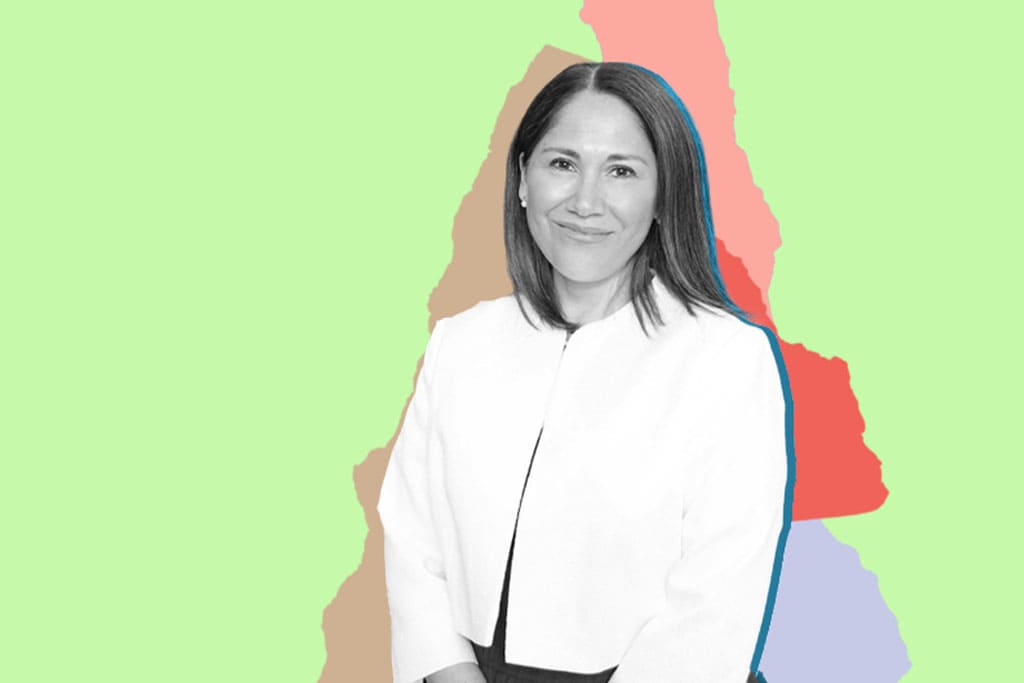
Dr Magdalena Alcocer, postgraduate coordinator at the Faculty of Global Studies at Anahuac University in Mexico, worked with security forces to encourage improvements in institutional and strategic practices.
We spoke with Alcocer, who will lead the panel “Women and Leadership in Intelligence for Security in Contexts of Violence” at the Amassuru 2025 Seminar “Challenges for Peacebuilding in Contexts of Violence.”
IN.VISIBLES (IV): Intelligence work tends to be ignored in the debate about security in Latin America. Why is that?
Dr Magdalena Alcocer (MA): I think it is not prioritised because of its very nature and especially because in Latin America and there are a number of clichés surrounding the word “intelligence”, which clearly have to do with our history, with the authoritarian regimes that used intelligence to combat their internal enemies. But I think we need to look at the issue of intelligence from several angles, including the need to use it in the context of democratic practices, with transparency and accountability, as well as by address the underrepresentation of women, particularly in leadership positions.
IV: What types of good practices need to be implemented to address the new security challenges the region is facing?
MA: I think that, in general, more resources need to be invested in professionalisation. Training an intelligence analyst takes a long time. Learning to think critically and sharply takes even longer. It is very important to work to break the inertia that exists in these sectors. In Latin America, security agencies are very male-dominated sectors.
This can be tackled through accountability mechanisms, internal mechanisms for organisational culture change, good practices and professionalisation. Issues of equality also need to be addressed through processes of legitimacy within the organisations themselves and accountability processes. No one will want to report an incident they might have suffered if there is no accountability. For many women, reporting an assault would mean ruining their career and never seeing justice.
IV: Are there any positive experiences in the region where women are gaining more access to these spaces that you describe in the security forces?
MA: Mexico has two interesting experiences. The first one is from 1989, when women first joined the Centre for Investigation and National Security, in civil intelligence, even though they did not reach positions of command. This somewhat mirrors the logic that also exists in the private sector. In other words, there are women who can be CEOs, but that does not mean that they will be on the board of directors where the most important decisions are made.
But the big problem is that our countries generate policies that are not applied in the long term, that last a whole six year-long presidential term in the case of Mexico, which depends heavily on the leadership of these strong executive powers in these systems where there is no evaluation of public policy. Projects and policies seem to be shelved when a presidential administration ends.
IV. What elements must a security strategy include to be effective?
MA: An effective security strategy requires a number of elements: adherence to democratic norms, serving citizens, and transparency. Security has multiple causes. We need to review the problems facing our social fabric, which is broken. Especially in countries as unequal and with as few opportunities as in Latin America, people say: “I’d rather join organised crime, die trying and leave something to my family than never be able to achieve social mobility”.
It’s dramatic. Because we were unable to generate development policies that would create better conditions for people to be able to overcome poverty and inequality.
IV: The United States has radically changed its security policy in the region…
MA: Yes. In Mexico, for example, the security strategy is a very complex one because our economy is now securitised, that is, security and financial issues go hand in hand in our bilateral relationship with the US, which is something that didn’t happen in the past. Our relationship with the US is the most important in the region, although we should also have good relations with our neighbours to the south, with Central America, especially because of their proximity. Mexico should position itself as a benchmark in terms of security and cooperation in the region. The problem is that we are not looking to the future.
IV: Trump is proposing a security strategy that is much more based on confrontation and less on intelligence.
MA: That’s right. They have made many cuts to their intelligence agencies. While they said that democratic institutions were the most important thing, in practice they weakened those institutions and undermined the good practices of the intelligence and security agencies.
IV. What are the main challenges facing the region in terms of security strategies?
MA: There are many challenges, including the professionalisation of the police and the inclusion of women in security and intelligence roles.
But what worries me most is the dismantling of democracy that we are seeing in the midst of a changing world, where the international architecture itself is changing, including in relation to new technologies such as artificial intelligence. The question here is: Who will control these technologies?
And, as always, it is the vulnerable population that is most exposed to everything: lack of access to justice, extortion, violence and the vacuum left by the state. Once the state withdraws, dynamics are created that are very difficult to dismantle, and that is when organised crime generates human capital, which, in the most violent region in the world, is dramatic.
This interview has been summarised and edited for clarity.
The international seminar, organised by Amassuru , “Challenges for peacebuilding in the context of violence” will take place in Mexico City on 27 and 28 November 2025. Details on registration and access to the event broadcast are available here.
